
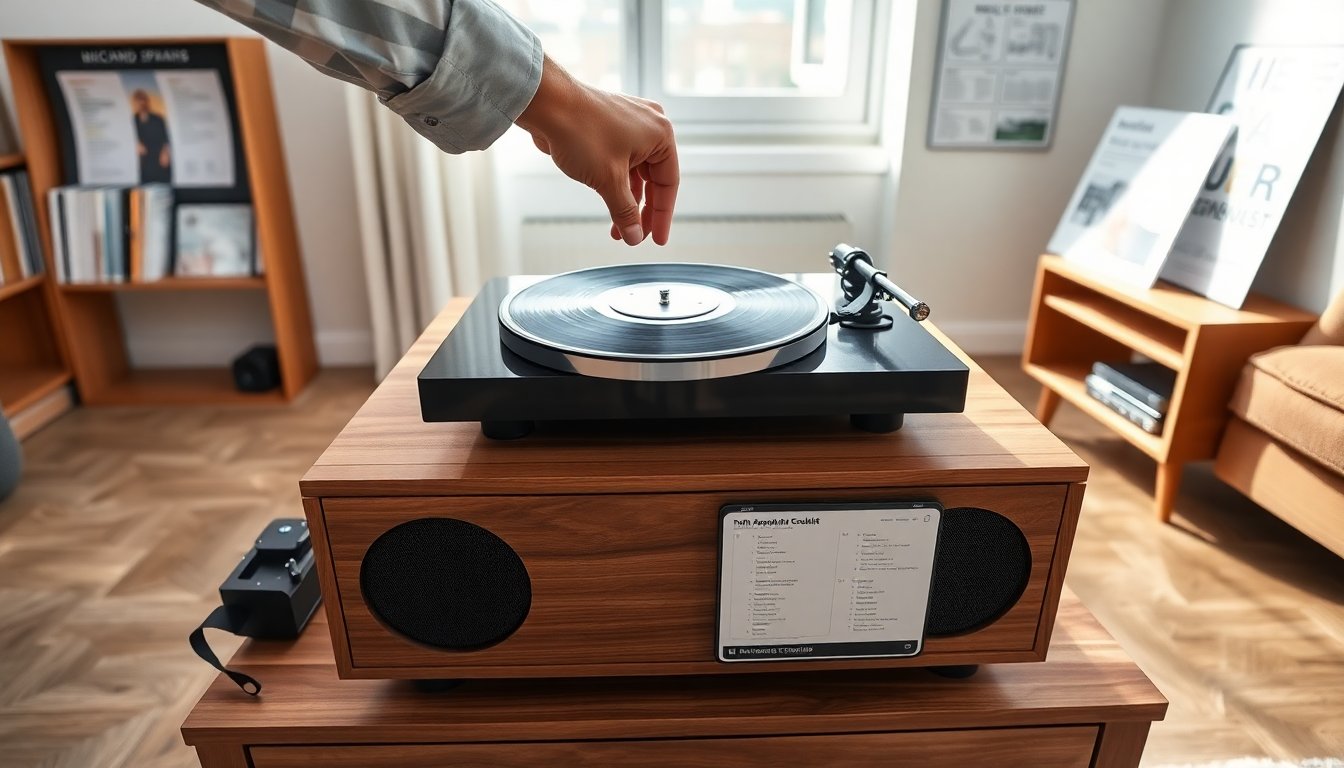
A vinyl record player with speakers gives a simple way to start listening to records. This guide explains why a combined unit can work well for many buyers. It lists key features to compare and shows how to set up and care for the system. The advice helps readers pick a model that fits budget, space, and listening goals quickly and with confidence.
Key Takeaways
- A vinyl record player with speakers offers a convenient, space-saving all-in-one solution ideal for beginners and small spaces.
- Choosing the right integrated unit involves comparing cartridge type, drive system, platter weight, and speaker size to match your sound quality and upgrade goals.
- Proper setup includes placing the system on a stable surface, leveling the platter, and regularly cleaning records and the stylus for optimal playback.
- Built-in preamps and connectivity options like Bluetooth add flexibility, allowing use with external speakers and wireless devices.
- Upgrading components such as cartridges and external speakers can enhance sound quality over time while maintaining the ease of an all-in-one vinyl record player with speakers.
Why Choose An All‑In‑One Turntable With Built‑In Speakers?
An all‑in‑one vinyl record player with speakers saves space and cost. Buyers get a single box that plays records and sends sound to the built‑in speakers. This design fits dorm rooms, kitchens, and small apartments. People who own small collections often prefer the simplicity of an integrated system. It removes the need to match a separate amplifier and speaker set.
An integrated unit also reduces setup time. A person unboxes the player, plugs it in, and places records on the platter. No receiver, no extra cables, and no calibration steps usually remain. For newcomers, that quick start lowers the barrier to enjoying vinyl.
Sound quality varies across models. Entry‑level all‑in‑one players tend to use compact speakers and a simple preamp. Higher‑end integrated units include better cartridges and larger speaker drivers. A buyer who wants richer tone should look at models with wooden cabinets, heavier platters, and replaceable cartridges. Those parts improve resonance and tracking.
Portability is another reason to choose an integrated unit. Many modern vinyl record player with speakers designs include a handle or a lightweight frame. A person can move the system from room to room or bring it to a friend’s house. Bluetooth models add wireless playback and convenient pairing with phones.
Finally, an all‑in‑one unit reduces technical decisions. A buyer avoids matching impedance, power ratings, and speaker sensitivity. The manufacturer pairs components for a balanced sound. For people who value ease and predictability, that pairing adds real value.
How To Choose The Right Model: Key Features To Compare
A buyer should compare the cartridge, drive type, platter weight, and speaker size. These parts affect sound and long‑term use. The cartridge determines how the stylus reads grooves. Moving magnet cartridges cost less and allow easy replacement. Moving coil cartridges often sound clearer but cost more and need a compatible preamp.
Drive type matters. Belt‑drive turntables reduce motor noise in the tonearm. Direct‑drive units offer stable speed and fast start‑stop, which suits DJs. Most vinyl record player with speakers units use belt drive to prioritize quiet playback for home listening.
Check platter mass. A heavier platter resists speed wobble. A person hears steadier pitch and fewer artifacts with a denser platter. Look for metal or dense acrylic platters rather than thin plastic.
Evaluate speaker power and size. Larger drivers move more air and deliver fuller bass. A buyer should not assume higher watt numbers always mean better sound. Listen for clarity at low and mid volumes. Compact speakers may sound fine at typical room levels but can distort when pushed.
Inspect the built‑in preamp and connectivity. A unit with a switchable phono preamp provides more flexibility. It lets a user connect the player to an external receiver or powered speakers later. Bluetooth and line‑out options increase the system’s usefulness.
Consider cartridge upgradeability. A buyer who plans to improve sound should choose a model with a removable cartridge. This choice extends the life of the vinyl record player with speakers and lets the owner invest in a better stylus later.
Weigh materials and build quality. Wooden cabinets and metal tonearms reduce resonance. Plastic parts cut cost, but they can introduce unwanted vibration. Read reviews that report long‑term durability and easy servicing.
Finally, match the purchase to listening habits. A casual listener may prefer a compact, low‑cost vinyl record player with speakers. An enthusiast should prioritize model components and upgrade paths.
Setup, Maintenance, And Getting The Best Sound From Your All‑In‑One System
Place the vinyl record player with speakers on a stable, level surface. A steady shelf or table reduces vibration and improves playback. Keep the unit away from active radiators and heavy foot traffic. If the player sits on a resonant shelf, a small isolation pad or rubber feet help.
Level the platter. Most users can adjust the feet or add a small shim. Leveling ensures even tracking and reduces distortion. Check the cartridge alignment if the unit allows it. Correct alignment reduces wear on records and increases clarity.
Clean records and the stylus regularly. A clean record reduces surface noise. Use a carbon fiber brush to remove dust before each play. A stylus brush cleans the tip without damage. For deep cleaning, use a record cleaning solution and a microfiber cloth or a record‑cleaning machine.
Set the tracking force and anti‑skate per the cartridge’s specifications. A wrong tracking force causes wear or distortion. Many integrated players come preset. A person who upgrades the cartridge should verify and adjust these settings.
Manage volume and EQ. Built‑in speakers may lack deep bass. A listener can improve perceived bass by placing the unit near a wall or corner. Avoid maxing the volume: built‑in amps can clip and add distortion. Use moderate levels for the cleanest sound.
Replace the stylus when it shows wear. A worn stylus damages records. Follow the manufacturer’s recommended hours for replacement. Keep replacement styli on hand if the owner plays records often.
Update firmware if the unit supports it. Manufacturers release updates that improve Bluetooth stability or fix bugs. Follow the instructions from the maker and keep backups of any settings.
Finally, plan gradual upgrades. A user can replace the cartridge or add a better external speaker pair if the player offers line‑out. This path keeps the simplicity of the original vinyl record player with speakers while improving sound over time.