
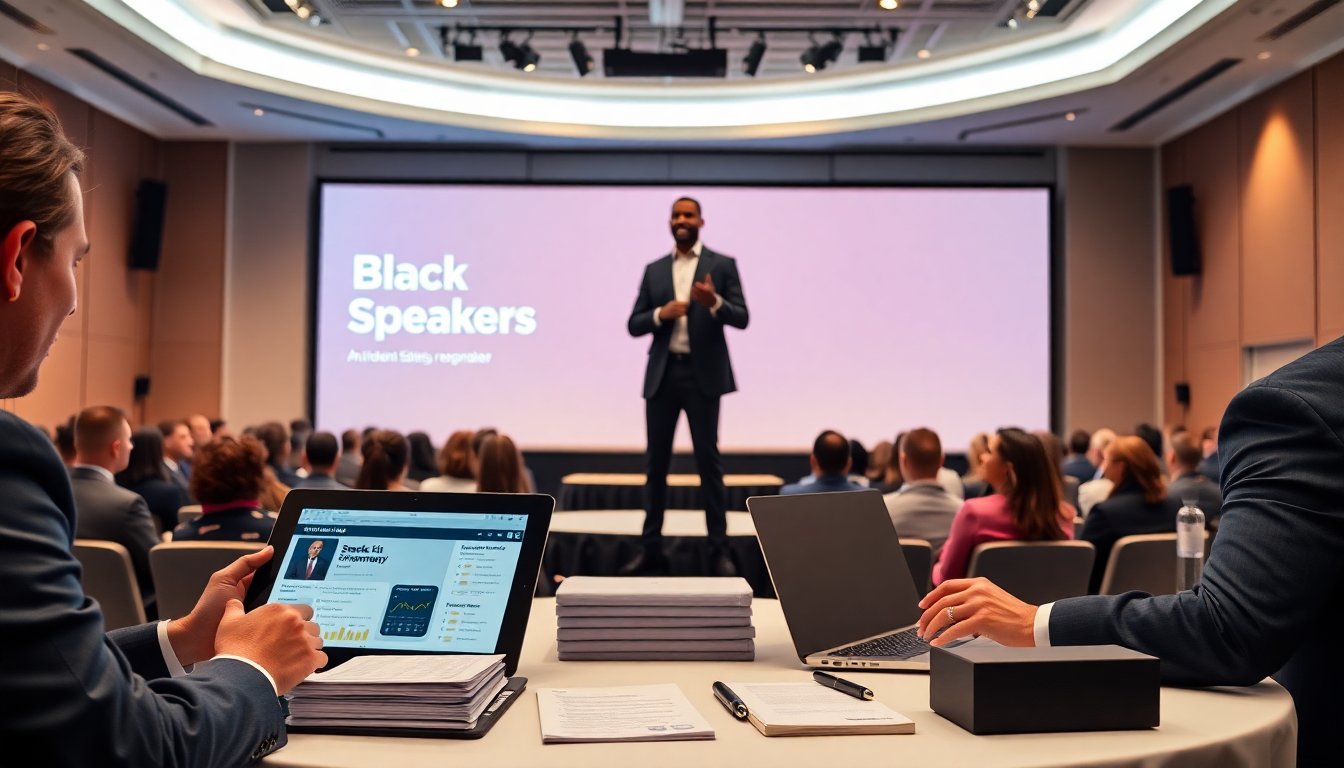
Black speakers matter for audience trust and diversity. Event planners must seek black speakers early. They must budget fair pay and build clear contracts. This guide lists places to find black speakers, shows how to vet fit, and gives practical steps to hire and support them.
Key Takeaways
- Booking black speakers enhances audience trust, promotes diversity, and increases event relevance for Black communities and beyond.
- Event planners should start sourcing black speakers early through specialized bureaus, professional networks, and community connections to ensure quality and fit.
- Evaluating a black speaker involves reviewing their audience impact, speaker kit, references, and logistical needs to ensure alignment with event goals.
- Fair compensation, clear contracts, and professional treatment are essential to build respectful, long-term relationships with black speakers.
- Preparing events to respect black speakers includes briefing teams, providing supportive environments, and honoring speaker content without last-minute changes.
- Amplify black speakers’ messages by promoting them before, during, and after events through multiple channels and tracking engagement to improve future bookings.
Why Booking Black Speakers Matters For Your Audience And Organization
Audiences respond to representation. Organizations gain credibility when they include diverse voices. Booking black speakers increases relevance for Black audience members and educates other attendees. Diverse programming can improve attendance and media interest. Sponsors often value events that show clear inclusion. Teams that hire black speakers signal that they value equity and perspective. This choice can change how a brand is seen. It can also help build long-term relationships with Black communities.
Where To Find Respected Black Speakers—Platforms, Networks, And Directories
Start with speaker bureaus that list black speakers by topic. Search professional networks and LinkedIn for public speakers who focus on race, leadership, or culture. Use directories that focus on diverse talent. Check university faculties and think tanks for scholars who speak publicly. Ask Black professional associations for referrals. Reach out to community leaders and local activists who speak on public stages. Use social platforms to find speakers who have video samples. Verify past events and audience feedback before you contact a speaker.
Key Questions To Evaluate A Black Speaker’s Fit And Impact
Ask what audiences the speaker has reached and what results followed. Request a speaker kit with topics, formats, and video samples. Ask for references from event organizers who hired that speaker. Ask how the speaker tailors the talk to the audience. Ask what outcomes the speaker aims to create. Check whether the speaker will meet accessibility needs. Ask about logistical needs and technical requirements. Confirm the speaker’s comfort level with Q&A and media opportunities.
Practical Steps To Hire, Compensate, And Contract Black Speakers
Create a clear job brief that names goals, audience size, and format. Set a fair budget and share it openly. Offer a compensation package that covers fee, travel, and prep time. Use written contracts that state fee, deliverables, cancellation terms, and usage rights for recordings. Include clauses for rider requests and accessibility. Pay deposits on signing and final payment promptly. Avoid token payments or last-minute low offers. Treat the hiring process as a business transaction and as a relationship-building step.
How To Prepare Your Event To Center And Respect A Black Speaker’s Work
Share the event agenda and attendee demographics with the speaker. Brief panelists and moderators on context and expectations. Provide a safe, professional green room and time to prepare. Train staff on how to introduce the speaker respectfully and accurately. Avoid surprise questions that force the speaker into emotional labor. Offer media lists and decide in advance which topics are off-limits. Ensure technical checks run before the session. Honor the speaker’s content and avoid last-minute edits without consent.
Ways To Amplify A Black Speaker’s Message Before, During, And After Your Event
Promote the speaker across channels and tag their profiles. Share short video clips and quotable lines in event marketing. Host a pre-event interview or live Q&A to build interest. Provide event photographers and share images with the speaker after the event. Publish a video or transcript with the speaker’s permission. Encourage press and partner channels to highlight the speaker’s ideas. Offer follow-up events or workshops to extend impact. Credit the speaker in all materials and link to their work.
Measuring Impact: Metrics And Feedback To Improve Future Bookings
Track attendance and session completion rates for talks by black speakers. Measure engagement with polls, Q&A volume, and social shares. Survey attendees about takeaway value and speaker clarity. Ask the speaker for their own feedback on audience fit and logistics. Track post-event actions, such as sign-ups or resource downloads tied to the session. Use these metrics to decide repeat bookings and budget changes. Share results with the speaker and use feedback to improve future events.