
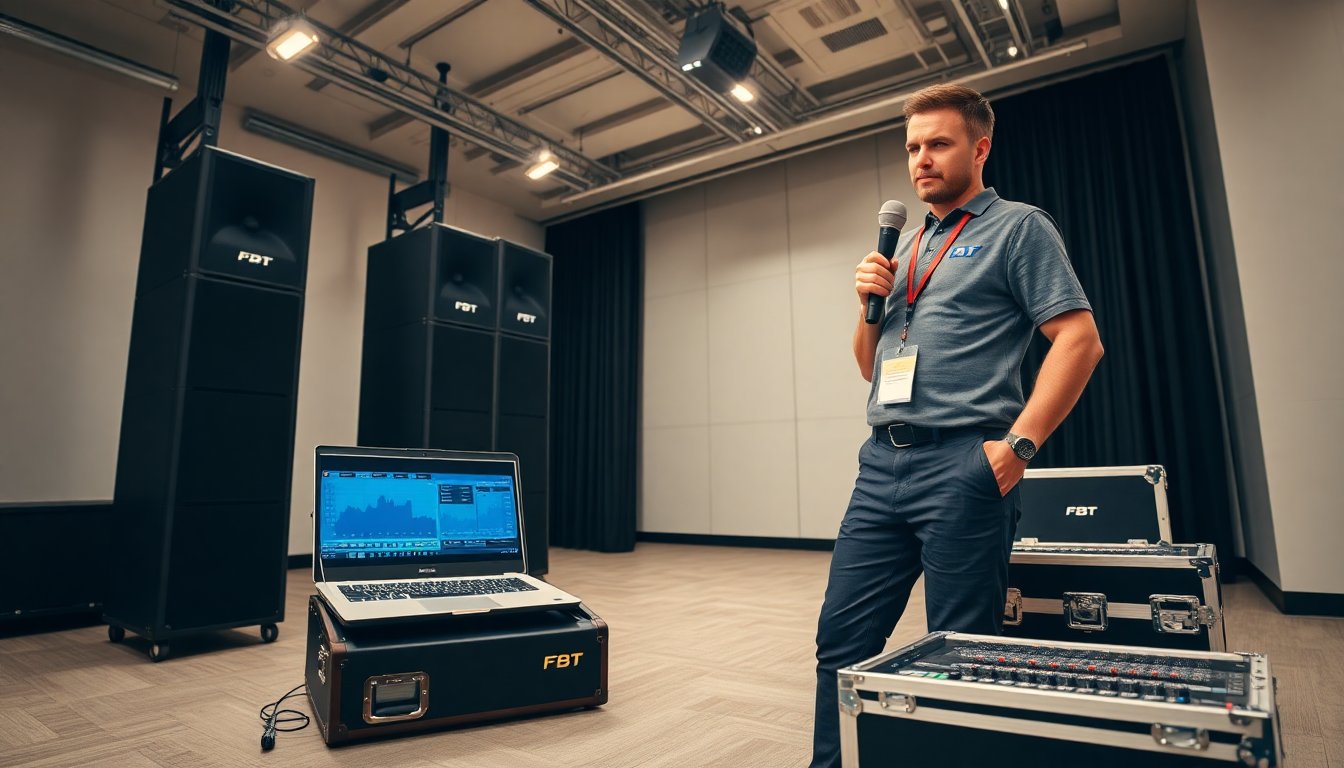
FBT speakers deliver clear, powerful sound for live events and installations. This guide explains FBT speakers, their history, and common uses. It shows how to pick a model, place cabinets, and keep systems working. The reader will get practical steps for clubs, houses of worship, and touring rigs.
Key Takeaways
- FBT speakers, known for punchy low end and clear midrange, are ideal for live events, clubs, houses of worship, and touring rigs.
- Choosing the right FBT speaker involves matching power, dispersion, and coverage with your venue size and audience needs.
- Proper setup includes positioning FOH speakers to cover the audience without reflections and using monitors aimed at performers with independent levels.
- Testing a demo unit in your space or renting before purchase helps avoid buying mistakes and ensures sound quality.
- Regular maintenance like checking connectors, cleaning cones gently, and troubleshooting distortion preserves FBT speaker performance and longevity.
What Are FBT Speakers? Brand History, Sound Character, And Typical Use Cases
FBT speakers come from an Italian company founded in 1979. The brand makes loudspeakers, subwoofers, and amplifiers for pro audio. Their designs favor punchy low end and clear midrange. Engineers tune the cabinets for live vocals and instruments. Sound techs choose FBT speakers for clubs, houses of worship, rehearsal rooms, and small tours. DJs pick FBT speakers when they need reliable power and consistent output. Installers like the compact enclosures for fixed sound systems.
Top FBT Models To Consider
FBT offers powered and passive options across several series. Each model targets a use case such as portable FOH, stage monitoring, or touring PA. Buyers should compare power rating, dispersion, and cabinet weight. They should match speaker coverage to room size and listener positions. Warranty terms and service support also factor into a purchase. Below are two key FBT series that suit most pro needs.
How To Choose The Right FBT Speaker For Your Gig Or Venue
Technicians should identify room size, listener count, and music style first. They should calculate required SPL using simple rules: 90 dB for small rooms, 100 dB for medium rooms, and 110 dB for large rooms as starting points. Then they should select an FBT speaker with sufficient continuous power and sensible dispersion for the space. They should confirm amplifier headroom and cable runs. They should also test a demo unit in the actual room before they buy. Renting a model for one event reduces buying mistakes.
Setup And Placement Tips For Live Sound, Monitoring, And FOH
Place FOH cabinets so the main beam covers the audience without hitting reflective surfaces. Aim the speakers slightly over the heads of the front row. Use a tripod or flown array for even coverage. For monitors, position boxes to point at the performer and keep levels independent from FOH. Use delay speakers for long rooms and set delays to align arrival times. Use measurement microphones and real‑time analyzer software to adjust EQ and delay. Cable neatness and secure rigging reduce noise and safety issues.
Maintenance, Care, And Common Troubleshooting For FBT Speakers
Technicians should inspect cabinets and connectors before each show. They should check grille integrity and driver condition. They should clean speaker cones with a soft brush and avoid harsh solvents. They should tighten terminal screws and replace frayed cables. If a speaker shows distortion, they should check input gain and amplifier clipping first. If distortion persists, they should swap cables and test with another amp to isolate the fault. For intermittent output, they should test the crossover and confirm firmware updates for powered models. They should log service actions and keep spare drivers and fuses on tour.