
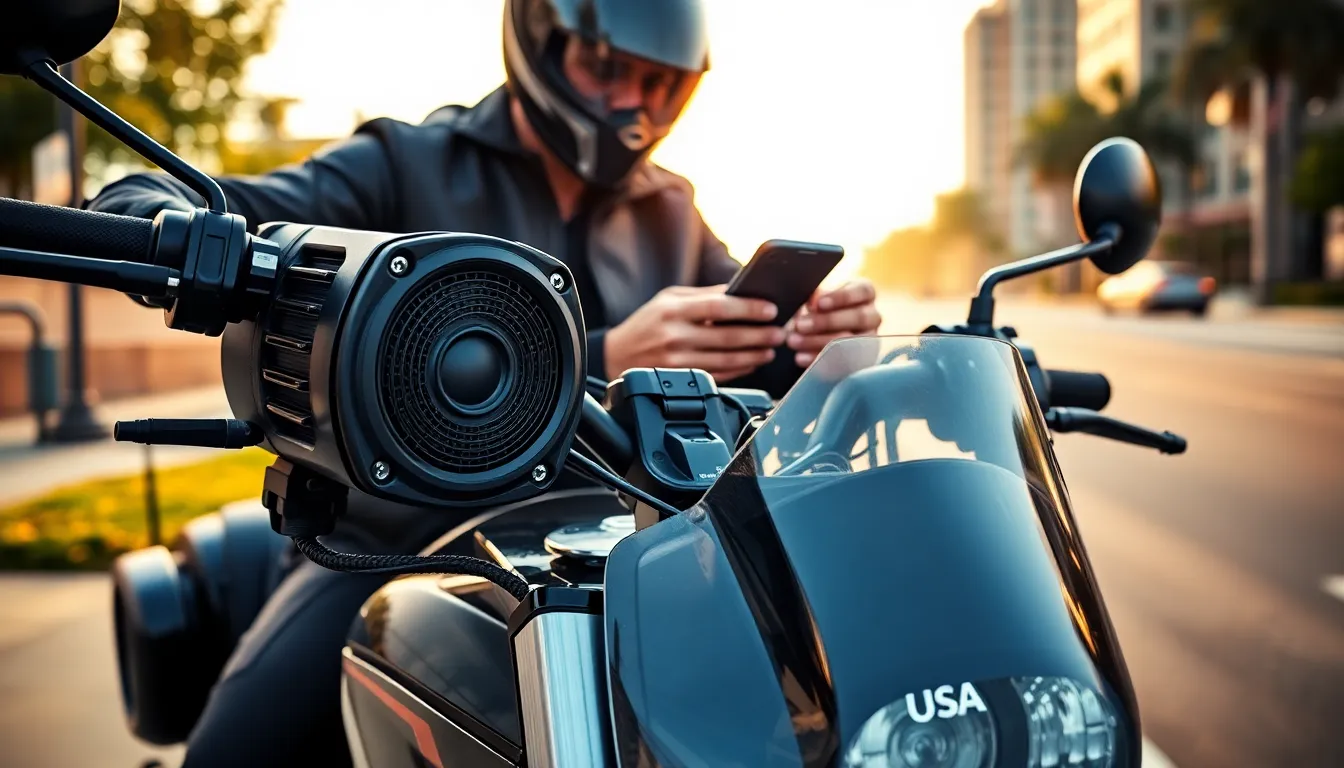
motorcycle bluetooth speakers with bass deliver deep low notes. Riders want bass for rhythm, clarity, and ride mood. This guide explains why bass matters. It shows key features, selection steps, installation tips, and care advice. Readers will learn practical steps to pick and keep a speaker that fits their bike and budget.
Key Takeaways
- Choose motorcycle bluetooth speakers with bass that extend below 80 Hz and pair realistic RMS power with the driver size to ensure strong, undistorted low end.
- Match speaker size, enclosure type, and mounting style to your motorcycle and riding style—cruisers can handle larger drivers while sportbikes need compact, low-drag units.
- Prioritize weatherproofing (IP rating), vibration-isolating mounts, and Class D amplification to preserve bass clarity, reduce battery drain, and survive road conditions.
- Optimize placement and secure mounting to eliminate rattles and phase issues, and test at road speeds to confirm consistent bass response.
- Maintain speakers by wiping gently, charging batteries before storage, and repairing when fixes cost less than 50% of a replacement to extend the life of your motorcycle bluetooth speakers with bass.
Why Bass Matters For Motorcycle Speakers
Bass gives low notes power. Bass helps drivers cut through wind and engine noise. Bass shapes how music feels at speed. Motorcycle bluetooth speakers with bass reproduce drums and bass lines so riders feel the beat. Strong bass improves vocal contrast and instrument separation. Poor bass makes music sound thin and tiring on long rides. Riders who value music quality choose speakers that deliver controlled bass without distortion.
Key Technical Features To Look For
Riders should check specific specs. The right specs predict bass quality and consistent performance. This section lists the parts that matter most.
Driver Size And Enclosure Design
Drivers move air. Larger drivers move more air and help bass. Enclosures shape bass response. Sealed enclosures give tight bass. Ported enclosures give louder low end but need careful tuning. Motorcycle bluetooth speakers with bass often use active enclosures with built-in woofers to balance size and output.
Frequency Response And Bass Extension
Manufacturers list frequency response ranges. A lower number shows deeper bass potential. Look for speakers that extend below 80 Hz for solid bass presence. Riders should avoid specs that list only midrange numbers. Real-world tests and reviews show how low notes translate to riding conditions.
Amplification, Power Ratings, And Efficiency
Amplifiers drive bass. Higher power helps maintain bass at high volume. Efficiency affects battery draw. Class D amps run cooler and use less power. RMS power ratings give realistic output measures. Motorcycle bluetooth speakers with bass perform better when RMS power matches driver capacity.
Bluetooth Version, Latency, And Multipoint Pairing
Bluetooth version affects range and latency. Newer versions reduce dropouts and improve audio quality. Low-latency codecs like aptX Low Latency cut sync problems for video or calls. Multipoint pairing lets riders keep a phone and passenger device connected. These features make a speaker easier to use on the road.
Durability, Weatherproofing, And Mounting Options
Speakers on bikes face rain, dust, and vibration. Look for IP ratings for water and dust protection. Metal mounts and rubber isolates reduce vibration. Quick-release brackets speed removal and charging. Motorcycle bluetooth speakers with bass should resist moisture and stay stable at highway speeds.
How To Choose The Right Speaker For Your Ride
Buy a speaker that fits the bike, the rider, and the budget. Riders should compare use cases and tradeoffs.
Riding Style And Motorcycle Type Considerations
Cruisers often fit larger speakers. Sportbikes need compact mounts and low drag. Adventure bikes need rugged, weatherproof units. Commuters may value battery life and simple pairing. Motorcycle bluetooth speakers with bass should match the bike profile and mounting space.
Desired Sound Profile And Listening Volume
Some riders want tight, accurate bass. Others want big, room-filling low end. Test speakers at moderate and high volumes. Choose a sound profile that preserves clarity when speed rises. Avoid speakers that distort when riders raise volume to hear music over wind.
Budget Tiers And Value Tradeoffs
Entry-level speakers deliver decent bass at low cost. Mid-range models add better drivers and amps. High-end units give refined bass, lower distortion, and longer life. Riders should weigh features like IP rating, amp class, and driver size against price. Motorcycle bluetooth speakers with bass appear in every tier, but value rises with build quality and tested performance.
Installation And Setup Best Practices
Proper installation improves bass and reliability. Riders should use secure mounts, reliable power, and smart placement.
Secure Mounting And Vibration Isolation
Tight mounts stop movement. Vibration isolation pads reduce rattles. Metal brackets work for heavier units. Use lock washers and thread lock for bolts. Motorcycle bluetooth speakers with bass can shift if riders skip isolation, and that shift kills low-end clarity.
Wiring, Power Sources, And Charging Tips
Hardwiring gives steady power. Use fused connections to protect circuits. Inline USB adapters work for temporary setups. Check vehicle voltage limits and use regulators when needed. Charge batteries off the bike in winter to extend life.
Placement For Optimal Bass Performance
Mount speakers where air movement supports low frequencies. Placing speakers near the bike frame or fairing can amplify bass. Avoid mounting on thin plastic that rattles. Test placement at road speeds and adjust to remove boom or phase cancellation.
Common Problems And Troubleshooting Tips
Speakers can show common issues. Riders can fix many problems with simple checks.
Distortion, Rattles, And Poor Bass Response
Distortion often comes from overdriving the amp. Lower gain or use an external amp to reduce distortion. Rattles come from loose mounts or panels. Tighten fasteners and add isolation. Poor bass can come from bad placement or an undersized driver. Move the speaker or add a subwoofer if needed. Motorcycle bluetooth speakers with bass often benefit from small changes in placement.
Bluetooth Connection Issues And Latency Fixes
Dropouts often come from interference or old phone software. Update phone firmware and clear old pairings. Move antennas away from heat sources and metal obstructions. Use low-latency codecs and the latest Bluetooth version to cut audio lag. Motorcycle bluetooth speakers with bass with multipoint pairing can sometimes require re-pairing after firmware updates.
Maintenance, Care, And Longevity Tips
Simple care increases life span. Riders should clean, store, and inspect speakers regularly.
Cleaning, Storage, And Seasonal Considerations
Wipe speakers with a damp cloth. Avoid strong solvents. Remove units for long-term storage in dry places. Charge internal batteries before storage. Winter storage in a heated place preserves seals and battery health. Motorcycle bluetooth speakers with bass last longer with routine care.
When To Repair Or Replace Your Speaker
Repair when parts fail and repair cost stays below replacement cost. Replace when drivers, amps, or Bluetooth modules fail and repairs cost more than 50% of a new unit. Choose new units that match past strengths and fix prior weaknesses. Motorcycle bluetooth speakers with bass that show persistent distortion, water damage, or battery failure usually deserve replacement.