
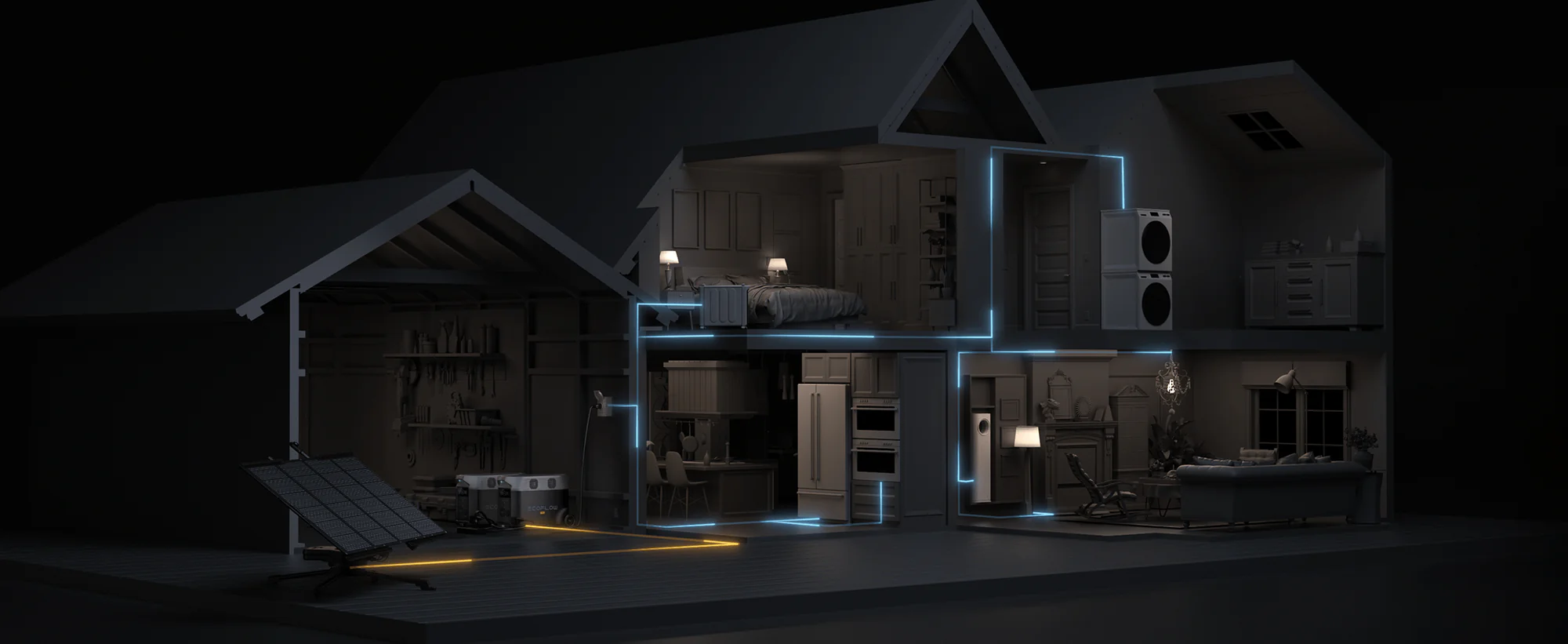
A home backup plan should start with the loads you need to protect. A power station can keep phones, lights, routers, small appliances, and some medical devices running when the grid goes down.
EcoFlow and Anker SOLIX both serve that need, but they approach it with different product ecosystems. The better choice depends on your home type, outage risk, installation comfort, and the devices you cannot afford to lose.
Start With the Backup Problem, Not the Brand
Most shoppers compare batteries too early. First, list the devices that matter during an outage. A refrigerator, internet router, phone charger, lamp, sump pump, or CPAP machine will create a very different backup profile than a full kitchen or central HVAC system.
For many homes, the right power station is not the biggest one on the shelf. It is the setup that matches daily routines, stores enough energy, and connects safely to the appliances or circuits you plan to support.
What EcoFlow and Anker SOLIX Are Built to Solve
Both brands focus on battery backup instead of fuel-powered generation. That means no gasoline storage, no exhaust during battery use, and far less noise than a portable gas generator. The tradeoff is limited stored energy unless you recharge.
Capacity and Output
EcoFlow DELTA Pro 3 lists 4096Wh capacity and 4000W output on its Canada product page. Anker SOLIX F3800 lists 3.84kWh capacity and 6000W output. Both sit above small weekend batteries.
Home Circuit Support
Large batteries become more useful when they can feed selected circuits safely. EcoFlow sells DELTA Pro 3 bundles with transfer switch and Smart Home Panel options. Anker SOLIX also promotes expansion and dual-voltage support.
Recharge Paths
Recharge speed matters before a storm and after a long outage. EcoFlow highlights fast AC charging and solar charging across DELTA models. Anker SOLIX also supports solar input on larger systems for longer interruptions.
Battery Chemistry
Both brands use lithium iron phosphate batteries in many current backup products. LFP chemistry is common in home energy storage because it supports long cycle life and stable daily use. Check model-specific claims before purchase.
Portability
A large home battery is still heavy. Wheels, handles, storage shape, and cable access can decide whether you keep it ready or leave it buried in a garage. For renters, mobility may beat maximum output.
Match the Setup to Your Home Type
The best backup setup is the one you will actually use. A smaller home may need only critical loads. A detached house may need circuit-level planning. An RV or workshop may need flexible output more than whole-home wiring.
Apartments and Condos
Apartment dwellers usually need quiet indoor backup for internet, lighting, phones, laptops, and maybe a small refrigerator. A compact or mid-size power station is easier to store, and it avoids the ventilation problems that make gas generators unsafe indoors.
Single-Family Homes
A house can justify a larger battery if outages last longer or affect food storage, heating controls, pumps, or remote work. In this case, EcoFlow and Anker SOLIX both make sense as ecosystems, not just single boxes.
RVs and Garages
RVs, detached garages, and hobby spaces often need outlets before they need panels. A power station with enough inverter output can run tools, cooking gear, Starlink, camera batteries, or small climate devices when shore power is not available.
Plan Around Weather, Noise, and Storage
Winter storms, wildfire smoke, and summer outages create different backup needs. A power station can sit indoors during normal battery use, which helps when outdoor generator placement is hard. Still, solar charging and extension cords need safe, dry, and code-aware planning.
Storage also affects real use. A power station that fits near a utility room, garage shelf, or closet is more likely to be charged before bad weather. If the unit is too hard to move, its capacity may not help when the outage starts.
A Neutral Comparison for Home Backup Buyers
To keep the comparison clear, use verified specs from two large home-backup models: EcoFlow DELTA Pro 3 and Anker SOLIX F3800. These numbers do not cover every bundle, but they give buyers a fair starting point.
|
Parameter |
EcoFlow DELTA Pro 3 |
Anker SOLIX F3800 |
|
Base capacity |
4096Wh |
3840Wh |
|
AC continuous output |
4000W |
6000W |
|
AC voltage |
120V / 240V |
120V / 240V |
|
Solar input |
2600W total |
Up to 2400W |
|
Weight |
113.54 lb |
132.3 lb |
The numbers show a practical split. Anker SOLIX F3800 leads on rated AC output, while EcoFlow DELTA Pro 3 offers slightly higher base capacity and a lighter unit. That balance may matter when a homeowner wants strong backup without overbuilding the system.
Both systems also support expansion, but expansion should follow a real outage plan. Extra batteries help only when the home has clear load priorities, enough storage space, and a safe way to route power to the devices or circuits that matter most.
What to Check Before You Buy
A backup battery should be sized from real use, not guesswork. Look at the wattage label on each device, estimate runtime, and decide whether the power station will support direct plug-in use, circuit-level support, or a mix of both.
Essential Loads First
Start with the devices that protect health, food, communication, and safety. That usually means phones, lights, router, refrigerator, and medical equipment when needed. Add comfort devices only after the core list fits within the battery and output limits.
Runtime Math
Battery capacity is measured in watt-hours. A device using 100 watts for five hours needs about 500 watt-hours before losses. Real results vary because inverters, startup surges, temperature, battery age, and device cycling all change usable runtime.
Installation Limits
Plugging devices into the battery is simple. Connecting a battery system to home circuits requires the correct transfer equipment and may require a licensed electrician. Always follow local code, especially when 120V and 240V loads are involved.
Why EcoFlow Makes Sense for a Flexible Home Backup Plan
EcoFlow is a strong fit when you want one backup path that can grow with your needs. The lineup covers compact daily backup, larger DELTA systems, solar charging, and selected home integration options without forcing every buyer into a whole-home system.
That flexibility matters. A power station should not sit unused until the next storm. EcoFlow makes it easier to use the same backup investment for home outages, weekend travel, garage work, and seasonal emergency planning.