
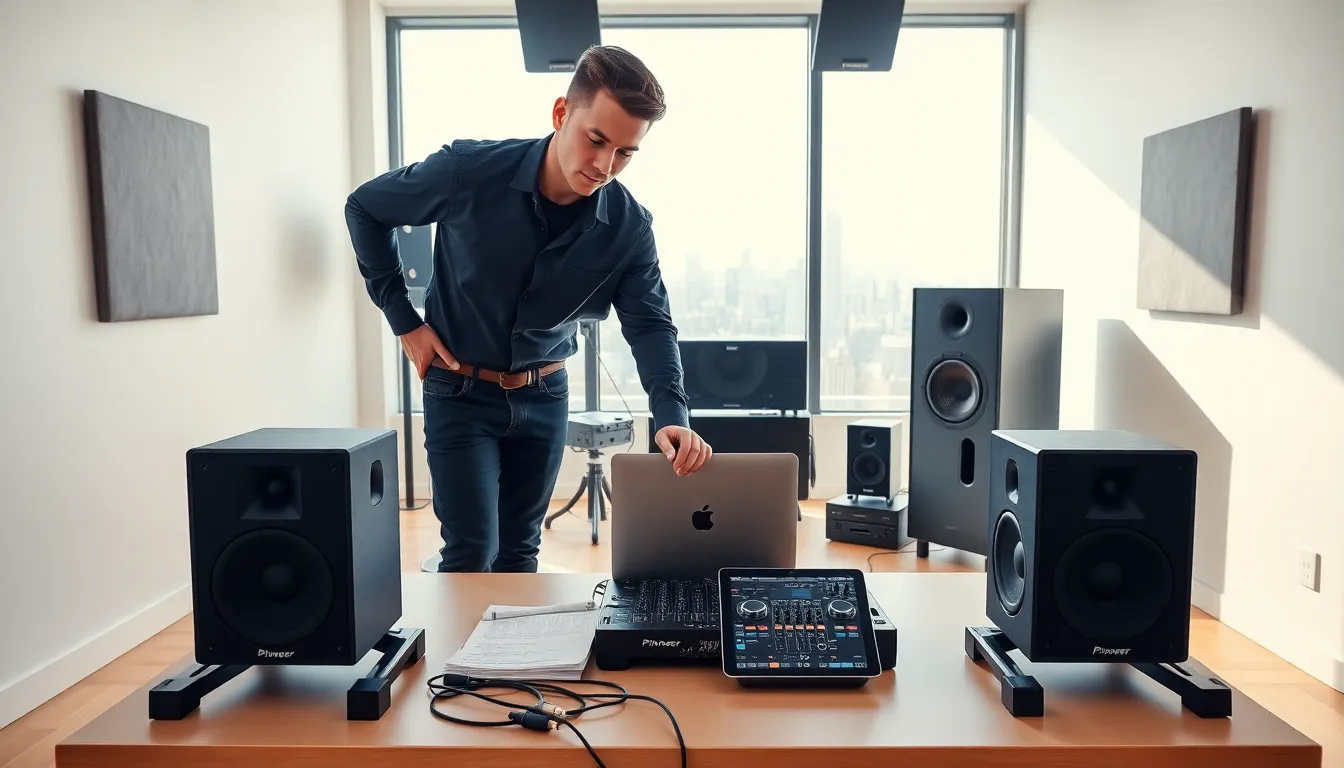
Pioneer DJ speakers deliver clear, punchy sound for DJs and producers. This guide explains models, features, and buying tips. It helps buyers choose the right Pioneer DJ speakers for practice, small gigs, and club use.
Key Takeaways
- Match Pioneer DJ speakers to venue size and SPL needs—choose compact active monitors for small rooms, higher-SPL models with subs for medium venues, and club-grade arrays for large crowds.
- Prefer active Pioneer DJ speakers for mobile setups and passive models for fixed installs, and confirm amplifier compatibility, balanced inputs, and controller outputs before buying.
- Prioritize models with DSP, EQ presets, protection circuits, and the right ports (XLR/TRS/RCA/USB) to simplify setup and protect sound quality.
- Optimize placement and room treatment—position speakers at ear height, angle them toward the listening area, use isolation stands, and treat first-reflection points and corners for clearer monitoring.
- Inspect used units for driver damage, verify warranty and dealer authorization, request demos or trials, and perform routine maintenance and firmware updates to extend lifespan.
Why Choose Pioneer DJ Speakers
Pioneer DJ speakers offer reliable sound and straightforward controls. They deliver accurate midrange and strong bass that DJs need. Professional DJs often trust Pioneer DJ speakers for consistent performance. The brand supports firmware updates and replacement parts. Buyers find value in clear documentation and active support.
Key Features To Look For
Buyers should check power rating, connectivity, and build quality. They should verify whether a model is active or passive. They should confirm the speaker covers the low end for the intended venue. They should look for DSP, EQ, and protection circuits. They should test controls and presets in person when possible.
Popular Pioneer DJ Speaker Models And Who They’re For
Pioneer offers models for home, studio, and club use. The DM series fits practice and bedroom production. The VM series suits DJs who need compact monitors for booth use. Club-oriented models serve larger venues and mobile DJs. Each model targets a specific user and budget. Buyers should match model specs to their use case.
How To Match Speakers To Your DJ Setup
Assess venue size and audience before choosing speakers. Small rooms need compact active speakers. Medium rooms need speakers with higher SPL and optional subwoofers. Large clubs need powered club speakers or speaker arrays. Check mixer outputs and controller compatibility. Confirm whether the setup needs onboard amplification.
Placement, Setup, And Sound Optimization
Place speakers to form a clear stereo image. Position speakers at or near ear height for the DJ. Leave space behind speakers to reduce reflections. Avoid placing speakers flat on surfaces that vibrate. Use isolation pads or stands to improve clarity.
Maintenance, Common Issues, And Troubleshooting
Perform routine checks on connectors and cables. Clean speaker grills and controls gently with a dry cloth. Update firmware when Pioneer releases stable updates. Test each channel regularly to detect faults early. Replace worn cables before they cause dropouts.
Buying Tips, Pricing, And Where To Purchase
Set a budget before you shop. Compare prices across authorized dealers and marketplaces. Inspect used speakers for cosmetic damage and driver tears. Verify warranty coverage and return policy. Ask for a demo in-store or request a short trial when buying online.
Power, Connectivity, And Port Types Explained
Active speakers include built-in amplifiers and power supplies. Passive speakers require external amplifiers and speaker cables. Balanced XLR and TRS inputs reduce noise. RCA inputs fit consumer gear and some controllers. USB connectivity allows direct audio from laptops on certain models.
Frequency Response, SPL, And Why They Matter
Frequency response shows which frequencies a speaker reproduces. SPL rating shows how loud a speaker can play before distortion. DJs need sufficient low-frequency output for dance music. Measuring SPL at the venue helps choose appropriate speakers.
Active vs. Passive Pioneer DJ Speakers
Active speakers simplify setup for most DJs. They combine amplifier and speaker in one unit. Passive speakers allow flexible amplifier upgrades. They often suit fixed club installs. Choose active speakers for mobility and passive for custom installs.
Built-In DSP, EQ, And Room Correction Features
DSP provides speaker protection and preset EQ. EQ lets DJs shape the sound for booths and rooms. Room correction adjusts output to reduce room-related peaks. Use presets as starting points and adjust by ear. Avoid extreme EQ boosts that cause distortion.
Pioneer DJ DM-40/DM-50 Series (Entry-Level Studio/Practice)
The DM-40 and DM-50 target bedroom DJs and small studios. They deliver clear mids and usable bass for monitoring. They include balanced and unbalanced inputs. They offer compact footprints and dependable build. These models suit beginners and practice sessions.
Pioneer DJ VM Series (Performance Monitors)
The VM series targets booth monitoring and small PA setups. They provide higher SPL and extended low end compared to entry models. They include mounting points for stands or walls. DJs use them for club warm-up and mobile gigs. They balance clarity and power for performance.
Pioneer DJ XPRS/Club-Oriented Models (If Applicable)
Club-oriented models deliver high SPL and robust low-frequency control. They support long runs and stable thermal performance. They include multiple inputs and speaker management features. These models suit bars, clubs, and rental rigs.
Assessing Venue Size, Audience, And Volume Needs
Count expected guests and room dimensions before choosing speakers. Larger crowds need higher SPL and sub coverage. Smaller gatherings need balanced monitors and modest subwoofers. Always plan headroom for peaks and DJ dynamics.
Matching With Mixers, Controllers, And Amplification
Check output types on mixers and controllers. Match balanced outputs to balanced inputs to reduce noise. Use appropriate adapters when needed. Verify gain structure from source to speaker to avoid clipping.
Cables, Adapters, And Signal Chain Best Practices
Use quality cables and secure connections. Keep power and audio cables separate when possible. Label cables for quick setup and teardown. Replace cheap adapters that may introduce noise.
Optimal Speaker Placement For Clubs, Home Studios, And Booths
Aim speakers toward the listening area for even coverage. Angle speakers slightly inward to improve stereo imaging. Keep speakers away from corners to reduce bass buildup. Raise speakers above audience heads in clubs for clarity.
Room Treatment Basics For Clearer DJ Monitoring
Add absorbers at first reflection points to reduce comb filtering. Use bass traps in corners to control low-frequency buildup. Place diffusers behind the DJ to reduce harsh reflections. Small treatments yield noticeable improvements.
Calibrating Levels, EQ, And Subwoofer Integration
Set speaker levels with a reference track and a handheld meter when possible. Use EQ to tame peaks and blend subs smoothly. Set crossover points between speakers and subwoofers to avoid gaps. Check levels at audience positions, not just at the DJ booth.
Routine Care, Cleaning, And Firmware Updates
Dust speaker ports and grills monthly. Inspect connectors for corrosion every few months. Update firmware when Pioneer posts stable releases. Store speakers in dry, cool places to extend lifespan.
Troubleshooting Common Problems (No Sound, Distortion, Hum)
Check power and signal cables first when no sound appears. Swap sources and cables to isolate faulty parts. Lower gain and check for distortion at each stage. Use ground lifts or balanced connections to reduce hum.
When To Service Or Replace Components
Replace drivers if they show physical damage or consistent distortion. Service amplifiers when overheating or producing noise. Replace worn connectors and cables to prevent intermittent faults. Seek authorized service for warranty work.
Budgeting, New vs. Used, And Warranty Considerations
Compare new prices versus used savings before buying. Inspect used speakers for driver tears and water damage. Favor models with remaining warranty when possible. Factor shipping and return costs into the final budget.
Reliable Retailers, Marketplaces, And What To Inspect In-Person
Buy from authorized dealers for warranty protection. Use reputable marketplaces for used gear but check seller ratings. Test speakers in person for sound quality and physical condition. Listen for rattles, uneven output, and driver distortion.