
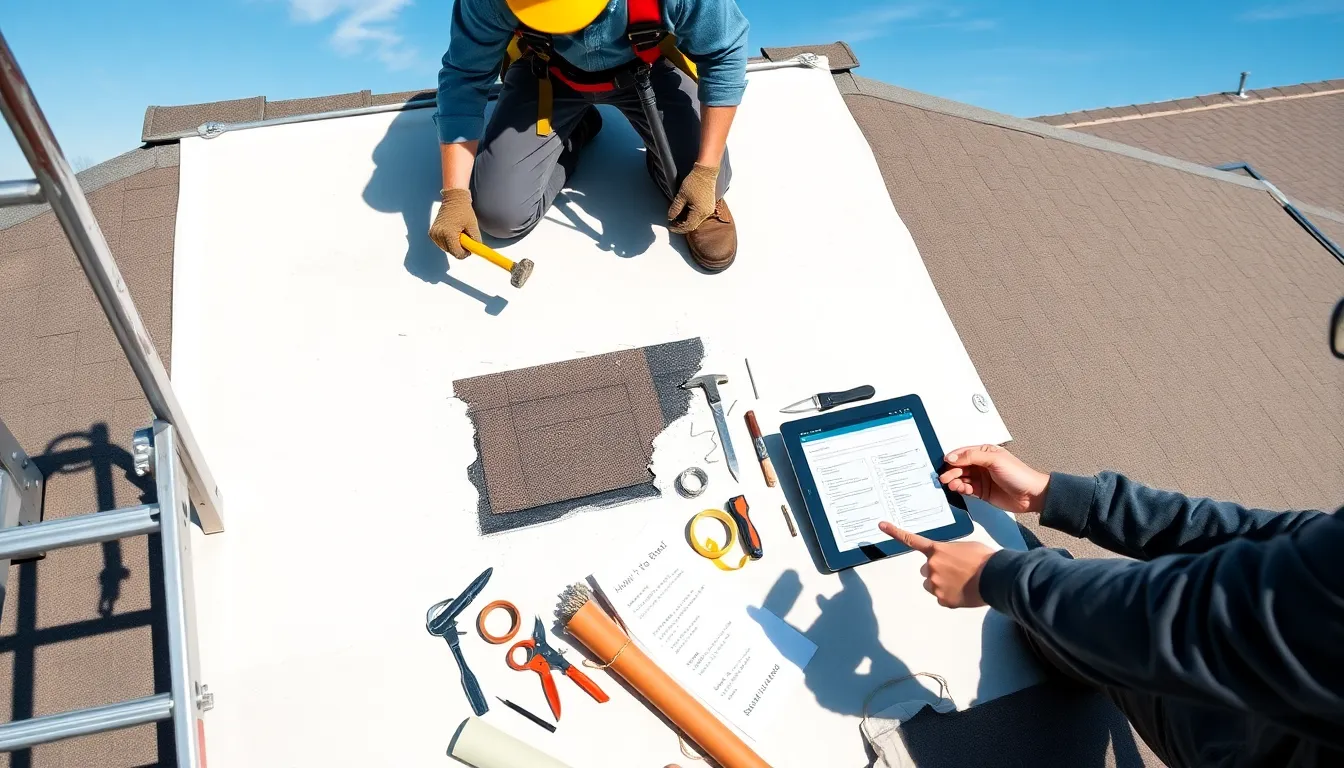
How to patch a roof is a practical skill homeowners can learn. This guide shows clear steps, safety points, and repair choices. It helps readers decide when to patch and when to call a professional.
Key Takeaways
- Assess damage first—inspect from the ground, photograph problem areas, measure the extent, and decide if the job is a simple patch or a full replacement before you patch a roof.
- Gather tools and safety gear in advance—hammer, pry bar, replacement shingles or patches, sealants, a harness, and a first-aid kit to reduce time on the roof and lower risk.
- Follow type-specific repair steps: replace individual asphalt shingles by removing nails and sliding in replacements, use overlapping metal patches and sealant for metal roofs, and apply matching membrane patches and primer/adhesive for flat roofs.
- Work safely—choose dry, low-wind conditions, secure the ladder, use fall protection on steep slopes, keep a partner or phone nearby, and stop immediately if conditions worsen.
- Call a professional when damage is widespread, decking is soft, the roof is very steep or multi-layered, or when complex flashing and structural issues exist rather than attempting to patch a roof yourself.
Assess The Damage And Determine Scope
Inspect the roof from the ground first. Use binoculars to spot missing shingles, rust, or sagging. Climb the ladder when conditions are dry and stable. Look for cracked shingles, loose flashing, soft spots, and pooled water. Count the damaged areas and measure their size. Note the roof type and the layer count. Photograph each problem for records. Decide if the repair is a small patch or part of a larger replacement. If the damage covers multiple square feet or the decking feels soft, they should consider a full repair estimate. A clear assessment guides material choice and time needed to patch a roof.
Gather Tools, Materials, And Safety Gear
Collect tools before climbing. Use a hammer, roofing nails, pry bar, utility knife, roofing cement, roofing tape, and a caulk gun. Include replacement shingles, metal flashing, rubber patches, and sealant for flat roofs. Bring a tape measure and chalk line for alignment. Wear a hard hat, gloves, slip-resistant shoes, and eye protection. Use a safety harness and roof anchors for steep slopes. Keep a first-aid kit within reach. Prepare a waste bag for old material. Lay out tools on a tarp near the ladder base. Proper preparation reduces time on the roof and lowers risk when they patch a roof.
Prepare The Work Area And Access The Roof Safely
Clear the yard below the work area. Move vehicles and cover plants. Place the ladder on level ground and secure it. Test ladder stability before each ascent. Keep three points of contact while climbing. Mark the work area with warning signs if people live in the house. Work when winds are low and the roof is dry. Set up roof jacks and planks for larger jobs. Keep tools tethered to prevent drops. Remove loose debris from the roof before they patch a roof. Step slowly and check each foot placement. Exit the roof immediately if rain begins.
Patch Approaches For Common Roof Types
Different roofs require different patch methods. Choose the correct method before they patch a roof.
Asphalt Shingle Repairs
Remove the damaged shingle by lifting the tabs above it. Pull out the nails with a pry bar. Slide in a replacement shingle and nail it in place. Seal nail heads with roofing cement. Press the tabs flat and apply sealant along the edges.
Metal Roof Repairs
Clean the area and remove rust with a wire brush. Apply a metal patch that overlaps the hole by at least two inches. Fasten the patch with self-tapping screws and neoprene washers. Seal the edges with compatible metal roof sealant. For seams, use a seam tape plus sealant.
Flat Roof And Rubber Membrane Repairs
Clean and dry the surface. Cut a patch from matching membrane material. Apply primer if the manufacturer recommends it. Use adhesive or heat-weld the patch per material instructions. Roll the patch to remove air pockets. Seal the perimeter with compatible sealant. They should inspect patches monthly for the first season after they patch a roof.
Step‑By‑Step Patch Process (General Workflow)
Follow a clear workflow to stay efficient. This workflow applies when they patch a roof.
Small Shingle Repair, Replace A Single Shingle
Lift the edge of the shingle above the damaged one. Remove nails from the damaged shingle. Slide the damaged shingle out. Insert the new shingle and nail it. Seal the tabs with roofing cement.
Repairing Multiple Damaged Shingles Or Flashing
Remove the row of damaged shingles if seams or underlayment show damage. Replace the underlayment where it shows rot. Install new shingles and flashings in sequence. Bend and fit flashing around vents and chimneys. Seal all flashing edges with roofing cement.
Patching Holes And Seams On Metal Roofs
Cut away jagged metal near the hole. Shape the patch to match the roof contour. Fasten the patch with screws through existing ribs when possible. Seal screw heads and patch edges with metal-compatible sealant. Inspect adjacent panels for stress cracks.
Applying Patches On Flat Or Rubber Roofs
Trim the patch to extend past the damage by several inches. Apply adhesive or heat-weld the membrane per instructions. Press the patch firmly and roll it flat. Seal edges with manufacturer-recommended product. Allow cure time before walking on the patch.
Safety Tips, Maintenance, And When To Call A Professional
Use safe habits every time they patch a roof.
Essential Safety Considerations
Check weather before any work. Use fall protection on slopes above 4:12 pitch. Work with a partner when possible. Keep a charged phone within reach. Avoid walking on wet or icy surfaces. Replace worn ladders and harnesses.
Routine Maintenance To Prevent Future Leaks
Clean gutters twice a year. Trim overhanging branches that drop debris. Replace damaged shingles early. Inspect roof after major storms. Keep attic vents clear to prevent moisture build-up. A small check every season reduces the chance they must patch a roof later.
Signs You Should Hire A Professional Roofer
Call a pro if the roof shows large soft spots or widespread rot. Hire a pro for steep roofs or multi-layer shingles. Contact a contractor for structural damage or persistent leaks. Use a licensed roofer for warranty work and complex flashing around chimneys. A professional can estimate costs and provide a safe fix when they cannot patch a roof themselves.