
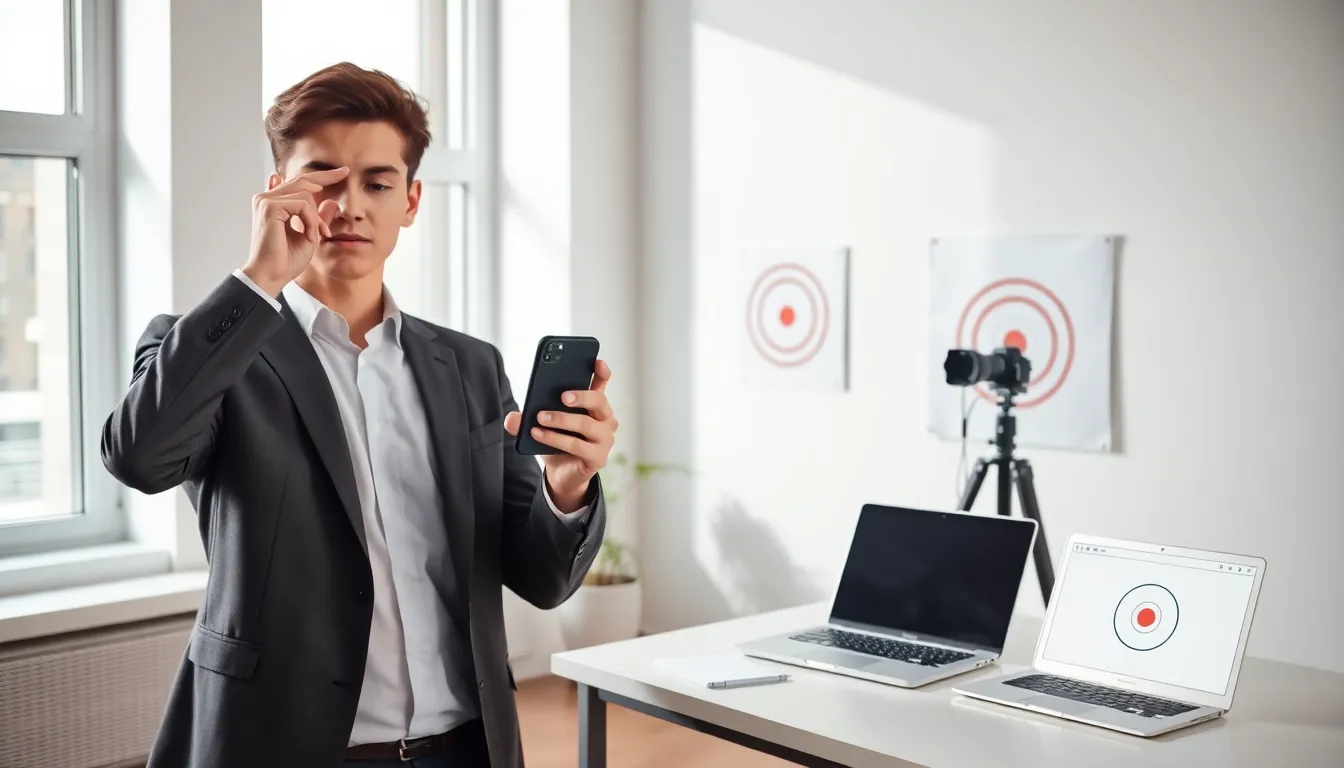
How to find dominant eye is a simple skill. It helps people aim, take photos, and shoot. This article shows quick tests, camera methods, and tips. The steps stay clear and direct. They require no equipment or special training.
Key Takeaways
- How to find dominant eye: use quick, no-equipment tests (hold a small target at arm’s length and alternately close each eye) to see which eye keeps the target centered.
- Confirm dominance with a camera or selfie by framing a subject, closing each eye in turn, and noting which eye maintains alignment for tasks like photography or aiming.
- Repeat tests at different distances and with/without corrective lenses to rule out lighting, strain, or vision issues and detect mixed or changing dominance.
- If results conflict, treat the situation as mixed dominance—choose the eye that matters for the task (aiming for shooters, composing for photographers) and train the other eye as needed.
- Record athletes’ dominant eye, adjust stance and sight to match dominance, and consult an eye care professional when tests remain unclear or vision problems affect results.
What Eye Dominance Is And Why It Matters
Eye dominance is the preference of one eye to provide a clearer single image. The brain favors input from that eye for tasks that need precise alignment. People use eye dominance in sports, shooting, and photography. Finding eye dominance helps people improve aim and framing. It also helps coaches set training and helps photographers choose composition. Eye dominance differs from eyesight. One eye can see better while the other remains dominant. People can have left dominance, right dominance, or mixed dominance. Mixed dominance means the brain uses different eyes for different tasks. Knowing how to find dominant eye gives practical value for training and equipment choice.
Quick Checks You Can Do Anywhere
These checks work without gear. They take under five minutes. They give a clear answer in most cases.
Camera And Photograph Methods
People can test eye dominance with a camera. They set a camera on a tripod. They frame a subject and look through the viewfinder. They close one eye and then the other. The eye that keeps the subject centered is dominant. Another method uses selfies. They hold the phone at arm’s length and center their face. They photograph while alternately closing each eye. They review which eye looks more aligned with the camera. Photographers also judge which eye they use to compose. That choice usually reveals the dominant eye. These methods work well because they mimic real shooting and framing tasks.
How To Interpret Conflicting Or Mixed Results
Conflicting results can occur. Tests can show different dominant eyes. People should repeat tests under consistent conditions. They should test across distances and tasks. If tests still conflict, they likely have mixed dominance. Mixed dominance means the brain uses one eye for aiming and the other for sighting. People can choose the eye that matters for their task. For shooting, they should favor the eye used for aiming. For photography, they should favor the eye used for composing. They should train each eye when performance needs improvement.
Practical Tips For Using Eye Dominance In Sports And Photography
Athletes should test before practice. Coaches should record each athlete’s dominant eye. Shooters should align sights to the dominant eye. Archers should place the bow in a way that matches eye dominance. Photographers should note which eye they use to compose. They should set equipment and stance to match that eye. If a person has mixed dominance, they should train both eyes for different tasks. Simple drills can improve coordination. For example, athletes can practice aiming while switching eyes. Photographers can shoot frames while alternating eye usage. Small adjustments in stance and sight often yield measurable gains.
Common Problems And Troubleshooting
Tests can fail if lighting is poor. Tests can fail if the target is unclear. People should use a clear, distinct target. They should test at multiple distances. Eye strain can affect results. People should rest their eyes before testing. Glasses and contacts can affect perception. People should test with and without corrective lenses. Children can show changing dominance as they grow. Adults can change dominance after injury or surgery. If results confuse them, they should consult an eye care professional. An eye specialist can run clinical tests and give a clear report on dominance and vision.